---
title: Designing for Generations: How Long-term Performance Reduces Environmental Impact in Commercial Flooring
description: Vinyl. Sustainability. Performance. Floors. Sustainable Design. Materiality. Metropolis. Mannington Commercial. Sustainable Flooring. PVC Free.
image: https://blog.manningtoncommercial.com/hubfs/Sus_Metrop_cover%20image.jpg
---
- [Carpet](https://www.manningtoncommercial.com/products/carpet/)
- [Modular](https://www.manningtoncommercial.com/products/carpet/modular/)
- [Broadloom](https://www.manningtoncommercial.com/products/carpet/broadloom/)
- [Entryway Systems](https://www.manningtoncommercial.com/products/carpet/entryway-systems/)
- [Xpress](https://www.manningtoncommercial.com/xpress/)
- [View all Carpet](https://www.manningtoncommercial.com/products/carpet/)
- [Hard Surface](https://www.manningtoncommercial.com/products/hard-surface/)
- [LVT](https://www.manningtoncommercial.com/products/hard-surface/lvt/)
- [Non-vinyl Resilient](https://www.manningtoncommercial.com/products/hard-surface/non-vinyl-resilient/)
- [Resilient Sheet](https://www.manningtoncommercial.com/products/hard-surface/resilient-sheet/)
- [Rubber Sheet & Tile](https://www.manningtoncommercial.com/products/hard-surface/rubber-sheet-tile/)
- [Liquid Linoleum](https://www.manningtoncommercial.com/products/hard-surface/non-vinyl-resilient/legato-liquid-linoleum/)
- [Wayfinding LVT](https://www.manningtoncommercial.com/products/hard-surface/lvt-wayfinding-products/)
- [Xpress](https://www.manningtoncommercial.com/xpress/)
- [View all Hard Surface](https://www.manningtoncommercial.com/products/hard-surface/)
- [Accessories](https://www.manningtoncommercial.com/products/accessories/)
- [Wall Base](https://www.manningtoncommercial.com/products/accessories/wall-base/)
- [Stair Systems](https://www.manningtoncommercial.com/products/accessories/stair-systems/)
- [Moldings & Finishings](https://www.manningtoncommercial.com/products/accessories/moldings-and-finishings/)
- [Weld Rods](https://www.manningtoncommercial.com/products/accessories/weld-rods/solid-weld-rods/)
- [Area Rugs](https://www.manningtoncommercial.com/products/accessories/area-rugs/)
- [View all Accessories](https://www.manningtoncommercial.com/products/accessories/)
- [Design](https://www.manningtoncommercial.com/design/)
- [Project Boards](https://www.manningtoncommercial.com/boards/)
- [Design Process](https://www.manningtoncommercial.com/design-process/)
- [Design Tools](https://www.manningtoncommercial.com/design-tools/)
- [Laying Patterns](https://www.manningtoncommercial.com/amtico-design-layouts/)
- [Installations](https://www.manningtoncommercial.com/design-installations/)
- [Segments](https://www.manningtoncommercial.com/design-segments/)
- [Learn about our Design](https://www.manningtoncommercial.com/design/)
- [Performance](https://www.manningtoncommercial.com/performance/)
- [Carpet](https://www.manningtoncommercial.com/performance/carpet/)
- [LVT](https://www.manningtoncommercial.com/performance/lvt/)
- [Resilient Sheet](https://www.manningtoncommercial.com/performance/resilient-sheet/)
- [Proven performance](https://www.manningtoncommercial.com/performance/)
- [Sustainability](https://www.manningtoncommercial.com/sustainability/)
- [Communities](https://www.manningtoncommercial.com/sustainability/communities/)
- [Recycling](https://www.manningtoncommercial.com/sustainability/recycling/)
- [Footprint](https://www.manningtoncommercial.com/sustainability/footprint/)
- [Transparency](https://www.manningtoncommercial.com/sustainability/transparency/)
- [Wellness](https://www.manningtoncommercial.com/sustainability/wellness/)
- [Doing the right thing](https://www.manningtoncommercial.com/sustainability/)
- [Resources](https://www.manningtoncommercial.com/resources/)
- [Find A Rep](https://www.manningtoncommercial.com/representatives/)
- [Find a Rep](https://www.manningtoncommercial.com/representatives/)
- [Search ](https://www.manningtoncommercial.com/search/)
-
-
### Search by Keyword
1. 
2. Show my results
[Search](https://www.manningtoncommercial.com/search/)
[Account](https://www.manningtoncommercial.com/account/)
- [Carpet](https://www.manningtoncommercial.com/products/carpet/)
- [Modular](https://www.manningtoncommercial.com/products/carpet/modular/)
- [Broadloom](https://www.manningtoncommercial.com/products/carpet/broadloom/)
- [Entryway Systems](https://www.manningtoncommercial.com/products/carpet/entryway-systems/)
- [Xpress](https://www.manningtoncommercial.com/xpress/)
- [View all Carpet](https://www.manningtoncommercial.com/products/carpet/)
- [Hard Surface](https://www.manningtoncommercial.com/products/hard-surface/)
- [LVT](https://www.manningtoncommercial.com/products/hard-surface/lvt/)
- [Non-vinyl Resilient](https://www.manningtoncommercial.com/products/hard-surface/non-vinyl-resilient/)
- [Resilient Sheet](https://www.manningtoncommercial.com/products/hard-surface/resilient-sheet/)
- [Rubber Sheet & Tile](https://www.manningtoncommercial.com/products/hard-surface/rubber-sheet-tile/)
- [Liquid Linoleum](https://www.manningtoncommercial.com/products/hard-surface/non-vinyl-resilient/legato-liquid-linoleum/)
- [Wayfinding LVT](https://www.manningtoncommercial.com/products/hard-surface/lvt-wayfinding-products/)
- [Xpress](https://www.manningtoncommercial.com/xpress/)
- [View all Hard Surface](https://www.manningtoncommercial.com/products/hard-surface/)
- [Accessories](https://www.manningtoncommercial.com/products/accessories/)
- [Wall Base](https://www.manningtoncommercial.com/products/accessories/wall-base/)
- [Stair Systems](https://www.manningtoncommercial.com/products/accessories/stair-systems/)
- [Moldings & Finishings](https://www.manningtoncommercial.com/products/accessories/moldings-and-finishings/)
- [Weld Rods](https://www.manningtoncommercial.com/products/accessories/weld-rods/solid-weld-rods/)
- [Area Rugs](https://www.manningtoncommercial.com/products/accessories/area-rugs/)
- [View all Accessories](https://www.manningtoncommercial.com/products/accessories/)
- [Design](https://www.manningtoncommercial.com/design/)
- [Project Boards](https://www.manningtoncommercial.com/boards/)
- [Design Process](https://www.manningtoncommercial.com/design-process/)
- [Design Tools](https://www.manningtoncommercial.com/design-tools/)
- [Laying Patterns](https://www.manningtoncommercial.com/amtico-design-layouts/)
- [Installations](https://www.manningtoncommercial.com/design-installations/)
- [Segments](https://www.manningtoncommercial.com/design-segments/)
- [Learn about our Design](https://www.manningtoncommercial.com/design/)
- [Performance](https://www.manningtoncommercial.com/performance/)
- [Carpet](https://www.manningtoncommercial.com/performance/carpet/)
- [LVT](https://www.manningtoncommercial.com/performance/lvt/)
- [Resilient Sheet](https://www.manningtoncommercial.com/performance/resilient-sheet/)
- [Proven performance](https://www.manningtoncommercial.com/performance/)
- [Sustainability](https://www.manningtoncommercial.com/sustainability/)
- [Communities](https://www.manningtoncommercial.com/sustainability/communities/)
- [Recycling](https://www.manningtoncommercial.com/sustainability/recycling/)
- [Footprint](https://www.manningtoncommercial.com/sustainability/footprint/)
- [Transparency](https://www.manningtoncommercial.com/sustainability/transparency/)
- [Wellness](https://www.manningtoncommercial.com/sustainability/wellness/)
- [Doing the right thing](https://www.manningtoncommercial.com/sustainability/)
- [Resources](https://www.manningtoncommercial.com/resources/)
- [Find A Rep](https://www.manningtoncommercial.com/representatives/)
Find a [representative](https://www.manningtoncommercial.com/representatives/), [distributor](https://www.manningtoncommercial.com/distributors/) or [contact us.](https://www.manningtoncommercial.com/contact/) Partner with us and get a [Strategic Account.](https://www.manningtoncommercial.com/strategic-accounts/)
[Terms and Conditions.](https://www.manningtoncommercial.com/terms/)[Privacy Policy.](https://www.manningtoncommercial.com/privacy/)
©2015–2026 Mannington Commercial. A business unit of Mannington Mills, Inc. All rights reserved.
# Mannington Blog
[Go Back](https://blog.manningtoncommercial.com/) | SpotlightSustainabilityCorporate Responsibility | 4 min read
- [](http://www.facebook.com/share.php?u=https://blog.manningtoncommercial.com/mannington-commercial-grounds-sustainability-in-performance&utm_medium=social&utm_source=facebook)
- [](https://twitter.com/intent/tweet?original_referer=https://blog.manningtoncommercial.com/mannington-commercial-grounds-sustainability-in-performance&utm_medium=social&utm_source=twitter&url=https://blog.manningtoncommercial.com/mannington-commercial-grounds-sustainability-in-performance&utm_medium=social&utm_source=twitter&source=tweetbutton&text=Designing%20for%20Generations:%20How%20Long-term%20Performance%20Reduces%20Environmental%20Impact%20in%20Commercial%20Flooring)
- [](http://www.linkedin.com/shareArticle?mini=true&url=https://blog.manningtoncommercial.com/mannington-commercial-grounds-sustainability-in-performance&utm_medium=social&utm_source=linkedin)
- [](http://pinterest.com/pin/create/button/?url=https://blog.manningtoncommercial.com/mannington-commercial-grounds-sustainability-in-performance&utm_medium=social&utm_source=pinterest&media=https://cdn2.hubspot.net/hubfs/2387982/Blueprint_Outline_1536x1536-20180214183023.jpg)
# Designing for Generations: How Long-term Performance Reduces Environmental Impact in Commercial Flooring
The path from 1915 to the present spans world wars, economic downturns, and the shifting landscape of American manufacturing, and [Mannington Mills](https://jadserve.postrelease.com/trk?ntv_at=4&ntv_ui=1ee5a728-a7b6-4ebc-a3c5-3e4a89a7b874&ntv_a=izQKAIyV2Aoi8RA&ntv_fl=5EJL09FFfcMV_m71Ci2QGqxAhTTpAQdWF4gsbuJ5hiz76RLglSULcvXE_vM0TchvF9E3yg-3ublnp1nl7ige6coIF2GatTitxPZUY5NO4WMkDtO_sJijMGIecZoawmGFEIy7H3-VwBL_SL-o1PEH5_QyCTBhPEOjVV3FaOgXx59bVfzT7I-IyWUB3PLAWkwRY873KCL9u39LwnBCmQiSLyRKP1NQoUyfug32a62vcCPHs1PMy2ceuG1tmhGykbl3S682U6GeRvOaNCPYfz7zUoHRPEIZwhg5E3nBlKTP9_xFGWNMxweM6AIgSfG9sIkaKOlL6TihC3oLzHMPJL5ID7TIvMTOK5lWa4cwgiUQLCvNapeXnsSDRjYbL5b4xfXxQpvkjMIwFJXZyZP3tXmozRdRN1N4kdU1vV0DAnHVmEmaQPWSqf6_kAQhHCK01fg-n5zUqKY_7VEReFfgp5bHV-2UoTyxTZcCMy5I3VLIV0GTQnP_-H58wc-jHApBy0GPzZPzTqfqdFNn99haiUeldQ==&ord=-1901036379&ntv_ht=nfU6aQA&prx_r=https://www.mannington.com/corporate) has remained in family hands through each chapter. Founded in Salem, New Jersey, and now in its fifth generation, the company is still led by successive generations of the Campbell family, including Chairman Zack Zehner, the great-great-grandson of founder John Boston Campbell. Continuity like this is uncommon; only a small percentage of family-owned companies reach this point, and it has shaped a long-held view of stewardship. As President and CEO Tom Pendley says, “We have been entrusted with both this company and our planet, and must pass them along better than we received them.”
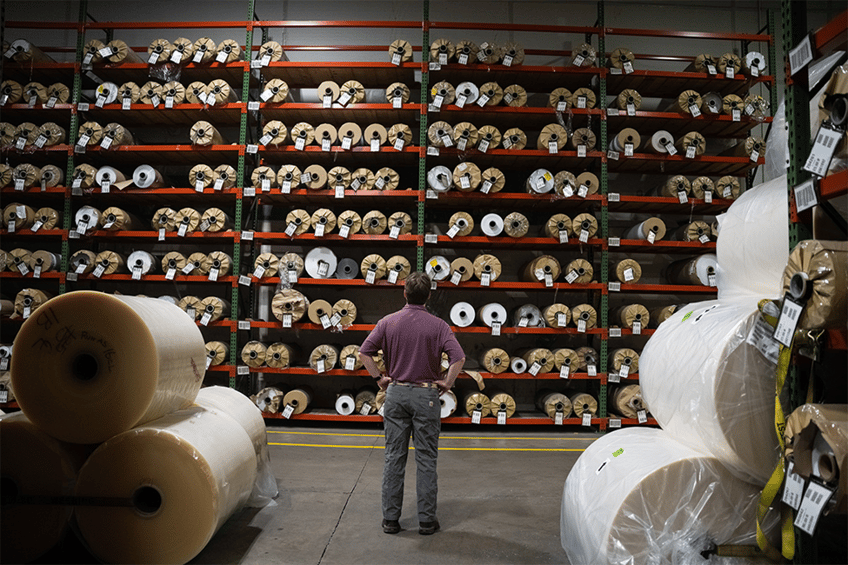
The same steadiness that defines its leadership informs the company’s understanding of performance. [Mannington Commercial](https://jadserve.postrelease.com/trk?ntv_at=4&ntv_ui=1ee5a728-a7b6-4ebc-a3c5-3e4a89a7b874&ntv_a=izQKAIyV2Aoi8RA&ntv_fl=5EJL09FFfcMV_m71Ci2QGqxAhTTpAQdWF4gsbuJ5hiz76RLglSULcvXE_vM0TchvF9E3yg-3ublnp1nl7ige6coIF2GatTitxPZUY5NO4WMkDtO_sJijMGIecZoawmGFEIy7H3-VwBL_SL-o1PEH5_QyCTBhPEOjVV3FaOgXx59bVfzT7I-IyWUB3PLAWkwRY873KCL9u39LwnBCmQiSLyRKP1NQoUyfug32a62vcCPHs1PMy2ceuG1tmhGykbl3S682U6GeRvOaNCPYfz7zUoHRPEIZwhg5E3nBlKTP9_xFGWNMxweM6AIgSfG9sIkaKOlL6TihC3oLzHMPJL5ID7TIvMTOK5lWa4cwgiUQLCvNapeXnsSDRjYbL5b4xfXxQpvkjMIwFJXZyZP3tXmozRdRN1N4kdU1vV0DAnHVmEmaQPWSqf6_kAQhHCK01fg-n5zUqKY_7VEReFfgp5bHV-2UoTyxTZcCMy5I3VLIV0GTQnP_-H58wc-jHApBy0GPzZPzTqfqdFNn99haiUeldQ==&ord=-1901036379&ntv_ht=nfU6aQA) views durability as a form of environmental responsibility, recognizing that each additional year of product use reduces the resources tied to replacement and end of life. The company approaches product life as a measurable environmental factor, where longer service spans lower the material, manufacturing, and transport demands associated with frequent renovation. This perspective forms the foundation for how its products are developed, evaluated, and refined over time.
Performance Measured Across Years of Use
Longevity sits at the center of Mannington Commercial’s approach to sustainability. The company studies how surfaces perform in real-world environments and how well they endure years of traffic, understanding that replacement cycles shape the overall environmental impact of a project. Extending a floor’s life reduces the manufacturing and transportation required for new product and minimizes the volume of material sent to landfill. The environmental savings accumulate steadily, tied to how long a floor remains viable before a renovation is considered.
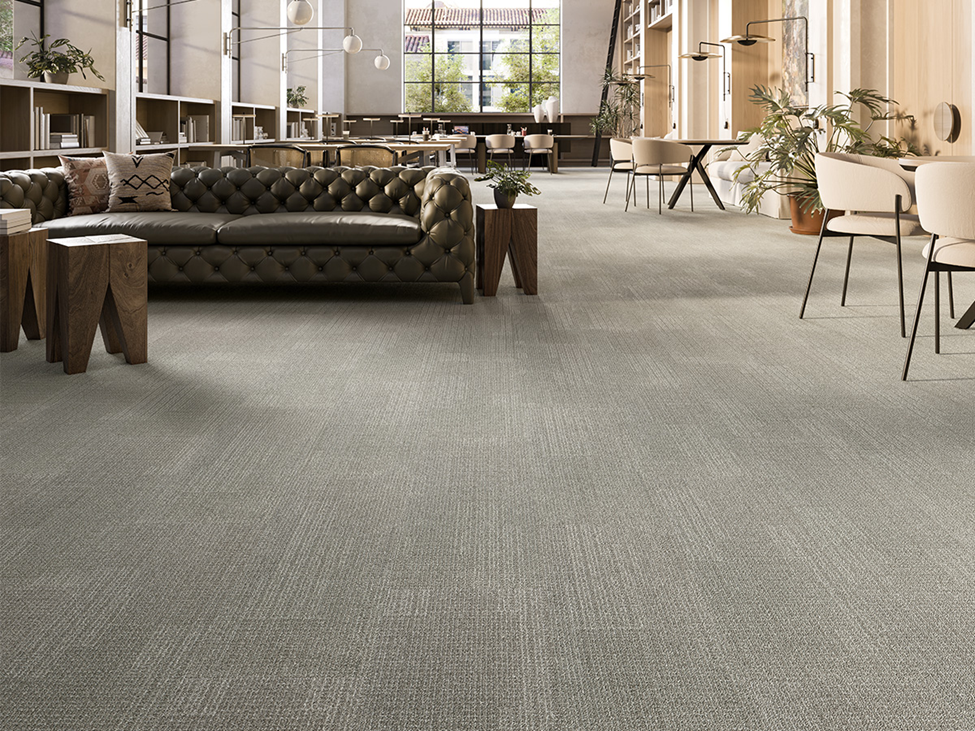
A longer service life also reshapes the way embodied carbon is understood. When a carpet tile or an LVT plank remains in use for an extended period, its impact spreads across a broader timeline. That calculation guides the company’s attention to wear performance, construction, and the durability needed for high-use commercial settings. Maintenance practices factor into that equation as well. Surfaces designed to avoid harsh chemicals support better indoor air quality and reduce the ongoing environmental load associated with routine cleaning. The cumulative effect links performance to sustainability in a direct and measurable way. At the same time, the company is working to lower the embodied carbon of its products through advances in material selection, manufacturing processes, and product design, reducing impact from the beginning of the product’s life cycle.
Manufacturing Rooted in Place and Practice
In 2024, more than 96% of Mannington Commercial’s flooring products sold were made in the United States, a manufacturing footprint that keeps production close to the communities where the company has operated for more than a century. Most raw materials are sourced domestically, which shortens transport distances and ties the supply chain to regions familiar with the company’s facilities and long-term presence. Keeping manufacturing close to where products are developed and managed enhances quality control and ensures greater consistency in both supply and design execution.
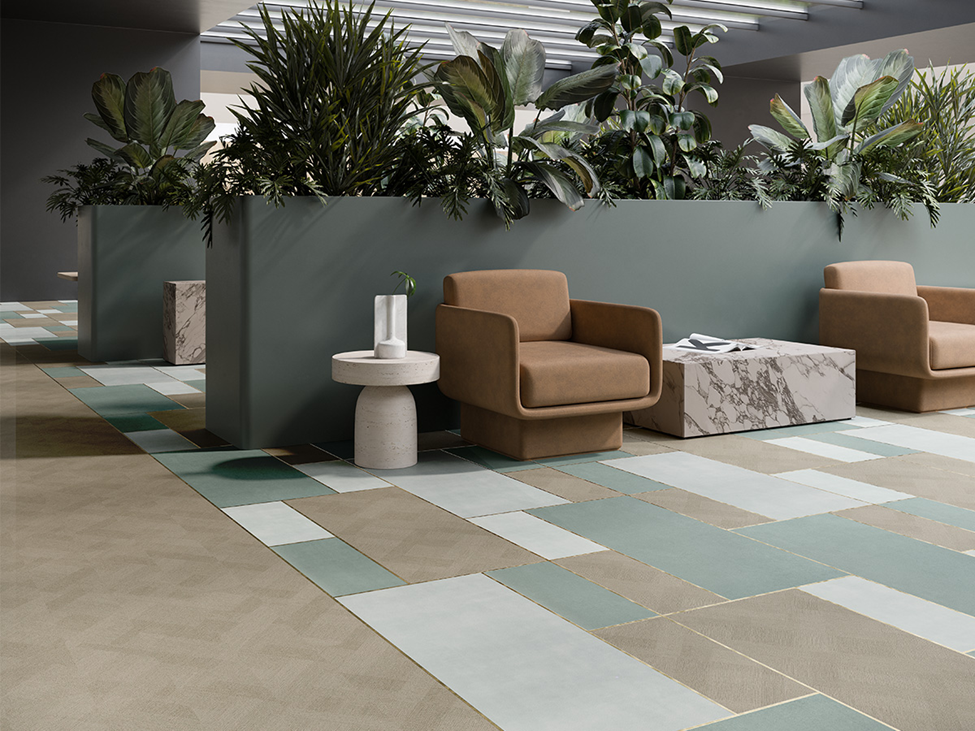
The company offsets the equivalent of 105% of cradle-to-gate greenhouse gas emissions from products manufactured in the United States through its partnership with the Appalachian Carbon Exchange. Mannington Commercial chose ACE because it is a regional, community-centered program that invests directly in the forests and landscapes that surround the areas where the company lives and works. The partnership ensures every offset supports local stewardship and reflects Mannington Commercial's long-standing commitment to responsible manufacturing.
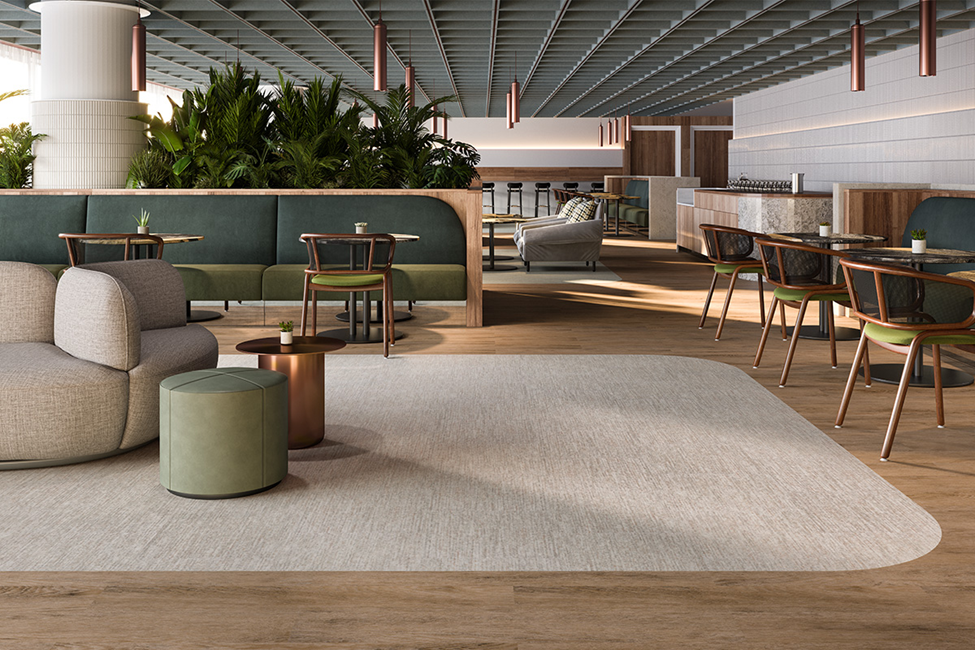
Local manufacturing also shapes the social and economic footprint of the company. Jobs remain in the regions that support its facilities, and materials move through shorter, more traceable supply routes that offer greater visibility from sourcing to finished product. The consistency of this approach reinforces the company’s commitment to environmental accountability and aligns daily operations with its long view of sustainability. “As a 100+ year-old American company, we’re proud that nearly all of what we sell is made right here at home because quality, reliability, and responsibility are inseparable,” says Richard French, President of Mannington Commercial.
Material Transparency and Responsible Innovation
Mannington Commercial approaches materials with the same focus it brings to performance and manufacturing, evaluating each component for its effect on indoor environments and long-term impact. Recent fiber updates reflect this work. The adoption of Universal Fibers’ Thrive® Nylon 6,6 increases recycled content to 75% while maintaining the durability required for commercial use. ECONYL® Nylon 6 is also part of the portfolio, offering fiber made from fully regenerated waste such as fishing nets and industrial scrap. These options give designers access to higher recycled content without compromising performance expectations.
Transparency supports this material work, with HPDs and EPDs publicly available for all product categories by 2026 and all flooring meeting either FloorScore® or Green Label Plus emissions standards. Additional third-party verifications, including +Vantage Vinyl® Silver and NSF/ANSI 140 for carpet, contribute to a framework that tracks material health, energy, emissions, and safety across operations.
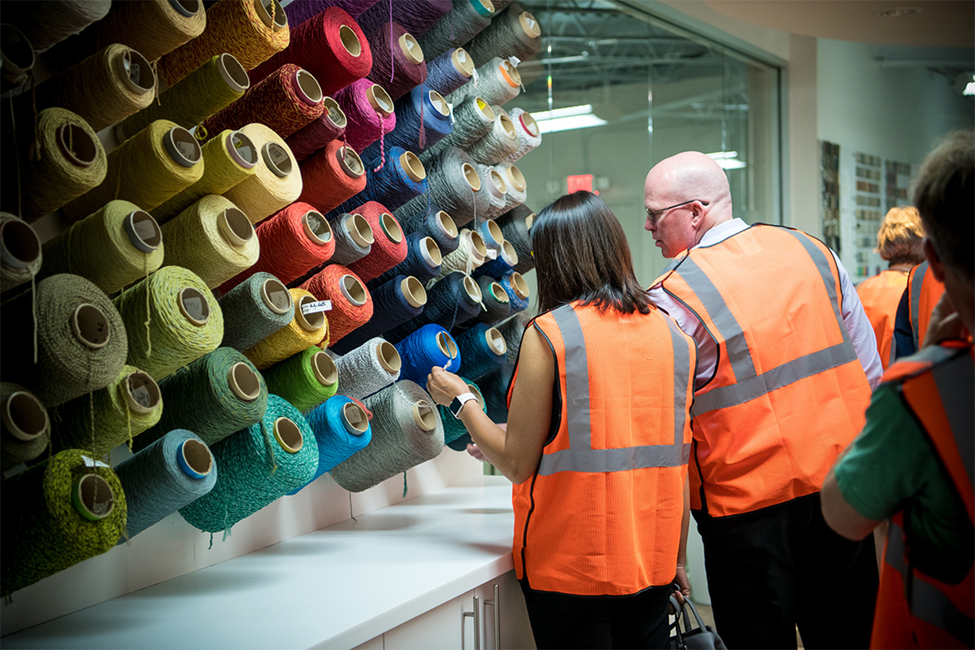
Recycling and waste management remain part of the picture. Carpet reclamation programs, combined with post-industrial recycling efforts, help keep material out of landfills, and more than 49% of manufacturing waste is diverted each year. Backing systems such as rEvolve® and Infinity® support these goals by eliminating PVC or incorporating recycled content from the outset. Together, these initiatives show how material choices, transparency, and responsible production shape the company’s approach to innovation. Across these areas, Mannington Commercial’s long view shapes decisions about performance, materials, and manufacturing, linking durability and sustainability in a way that reflects its multigenerational approach to design.
Topics: [Feature](https://blog.manningtoncommercial.com/tag/feature), [Spotlight](https://blog.manningtoncommercial.com/tag/spotlight), [Sustainability](https://blog.manningtoncommercial.com/tag/sustainability), [Corporate Responsibility](https://blog.manningtoncommercial.com/tag/corporate-responsibility)
**Share Articles To**
- [](http://www.facebook.com/share.php?u=https://blog.manningtoncommercial.com/mannington-commercial-grounds-sustainability-in-performance&utm_medium=social&utm_source=facebook)
- [](https://twitter.com/intent/tweet?original_referer=https://blog.manningtoncommercial.com/mannington-commercial-grounds-sustainability-in-performance&utm_medium=social&utm_source=twitter&url=https://blog.manningtoncommercial.com/mannington-commercial-grounds-sustainability-in-performance&utm_medium=social&utm_source=twitter&source=tweetbutton&text=Designing%20for%20Generations:%20How%20Long-term%20Performance%20Reduces%20Environmental%20Impact%20in%20Commercial%20Flooring)
- [](http://www.linkedin.com/shareArticle?mini=true&url=https://blog.manningtoncommercial.com/mannington-commercial-grounds-sustainability-in-performance&utm_medium=social&utm_source=linkedin)
- [](http://pinterest.com/pin/create/button/?url=https://blog.manningtoncommercial.com/mannington-commercial-grounds-sustainability-in-performance&utm_medium=social&utm_source=pinterest&media=https://cdn2.hubspot.net/hubfs/2387982/Blueprint_Outline_1536x1536-20180214183023.jpg)
Flooring Basics
### [The Pros and Cons of A Liquid Linoleum Floor](https://blog.manningtoncommercial.com/pros-and-cons-liquid-linoleum-floor)
Posted by Al Boulogne
Design, Feature, Editors Pick, Mannington Commercial
### [The Art of Versatility: How Mannington Commercial Marries Form and Flexibility](https://blog.manningtoncommercial.com/the-art-of-versatility-how-mannington-commercial-marries-form-and-flexibility)
Posted by Julie Borgognoni
Maintenance
### [Swiffer Wet Mop Vs. Contec Premira](https://blog.manningtoncommercial.com/commercial-vs.-residential-floor-cleaning)
Posted by Jim Toth Jr.
### Subscribe to Our Blog
- [Carpet](https://www.manningtoncommercial.com/products/carpet/)
- [Modular](https://www.manningtoncommercial.com/products/carpet/modular/)
- [Broadloom](https://www.manningtoncommercial.com/products/carpet/broadloom/)
- [Entryway Systems](https://www.manningtoncommercial.com/products/carpet/entryway-systems/)
- [Xpress](https://www.manningtoncommercial.com/xpress/)
- [Resources](https://www.manningtoncommercial.com/resources/carpet/)
- [Hard Surface](https://www.manningtoncommercial.com/products/hard-surface/)
- [LVT](https://www.manningtoncommercial.com/products/hard-surface/lvt/)
- [Non-Vinyl Resilient](https://www.manningtoncommercial.com/products/hard-surface/non-vinyl-resilient/)
- [Resilient Sheet](https://www.manningtoncommercial.com/products/hard-surface/resilient-sheet/)
- [Rubber Sheet & Tile](https://www.manningtoncommercial.com/products/hard-surface/rubber-sheet-tile/)
- [Liquid Linoleum](https://www.manningtoncommercial.com/products/hard-surface/non-vinyl-resilient/legato-liquid-linoleum/)
- [Wayfinding LVT](https://www.manningtoncommercial.com/products/hard-surface/lvt-wayfinding-products/)
- [Xpress](https://www.manningtoncommercial.com/xpress/)
- [Resources](https://www.manningtoncommercial.com/resources/lvt/)
- [Accessories](https://www.manningtoncommercial.com/products/accessories/)
- [Wall Base](https://www.manningtoncommercial.com/products/accessories/wall-base/)
- [Stair Systems](https://www.manningtoncommercial.com/products/accessories/stair-systems/)
- [Moldings & Finishings](https://www.manningtoncommercial.com/products/accessories/moldings-and-finishings/)
- [Weld Rods](https://www.manningtoncommercial.com/products/accessories/weld-rods/solid-weld-rods/)
- [Resources](https://www.manningtoncommercial.com/resources/accessories/)
- [Design](https://www.manningtoncommercial.com/design-tools/)
- [Project Boards](https://www.manningtoncommercial.com/boards/)
- [Design Tools](https://www.manningtoncommercial.com/design-tools/)
- [Segments](https://www.manningtoncommercial.com/design-segments/)
- [Gallery](https://www.manningtoncommercial.com/gallery/)
- [Sustainability](https://www.manningtoncommercial.com/sustainability/)
- [Communities](https://www.manningtoncommercial.com/sustainability/communities/)
- [Recycling](https://www.manningtoncommercial.com/sustainability/recycling/)
- [Footprint](https://www.manningtoncommercial.com/sustainability/footprint/)
- [Transparency](https://www.manningtoncommercial.com/sustainability/transparency/)
- [Wellness](https://www.manningtoncommercial.com/sustainability/wellness/)
- [Our Company](https://www.manningtoncommercial.com/about/our-story/)
- [Our Story](https://www.manningtoncommercial.com/about/our-story/)
- [Mannington on Main](https://manningtononmain.com)
- [Promo Inventory](https://app.manningtoncommercial.com/promotional-inventory/)
- [Showrooms](https://www.manningtoncommercial.com/about/showrooms/)
- [Press](https://www.manningtoncommercial.com/press/)
- [Careers](https://www.mannington.com/Corporate/About/Careers)
- [CEU Offerings](https://offers.manningtoncommercial.com/choose-a-ceu)
### Find a Representative
1. Find a rep now
Find a [distributor](https://www.manningtoncommercial.com/distributors/) or [contact us](https://www.manningtoncommercial.com/contact/).
Learn more about [Strategic Accounts](https://www.manningtoncommercial.com/strategic-accounts/).
Be in the know. [Sign up](https://manningtoncommercial-2387982.hs-sites.com/newsletter?__hstc=175284477.af1bb346de333eddb22f20691827ce8a.1580186034686.1580215160662.1580277662358.9&__hssc=175284477.5.1580277662358&__hsfp=818904025) for our mailing list.
©2015–2026 Mannington Commercial. A business unit of Mannington Mills, Inc. All rights reserved. [Terms and Conditions.](https://www.manningtoncommercial.com/terms/)[Privacy Policy.](https://www.manningtoncommercial.com/privacy/)[Made in the USA](https://www.manningtoncommercial.com/about/our-story/)
PO Box 12281 Calhoun, GA 30703-7004 |[1844 U.S. Highway 41 S.E. Calhoun, GA 30701](https://maps.apple.com/?daddr=1844%20U.S.%20Highway%2041%20S.E.%2C%20Calhoun%2C%20GA%2030701)|[(800) 241-2262](tel:+18002412262)